

Dog dental care is one of the most overlooked parts of keeping a dog healthy, yet it affects everything from fresh breath to long-term comfort. The good news is that a few minutes of brushing at home makes a real difference. This guide walks you through the tools you need, an easy step-by-step brushing routine, and the warning signs that mean it is time to call your veterinarian.
Why Dog Dental Care Matters
Every time your dog eats, a thin film called plaque forms on the teeth. If it is not removed, plaque hardens into tartar, which irritates the gums and can lead to periodontal disease. Dental disease is very common in dogs, and veterinary sources report that most dogs show some signs of it by around three years of age.
Poor dog dental care rarely causes problems in the mouth alone. Painful teeth can make a dog chew less, eat less, or become irritable when touched around the face. Much of the damage also happens below the gum line, where you cannot see it, which is why preventive dog dental care and regular checkups matter so much.
According to the American Veterinary Medical Association, regularly brushing your pet’s teeth is the single most effective thing you can do to keep their teeth healthy between professional cleanings.

Signs Your Dog Needs Better Dental Care
Some changes are easy to spot if you know what to look for. Make a weekly mouth check part of your dog dental care routine and watch for:
- Bad breath that does not go away
- Yellow or brown buildup on the teeth, especially the back molars
- Red, swollen, or bleeding gums
- Broken, loose, or missing teeth
- Chewing on one side, dropping food, or avoiding hard treats
- Pawing at the mouth or drooling more than usual
- Swelling on the face or under the eye
Any of these signs is a reason to book a veterinary exam. Dog dental care at home prevents problems, but it cannot fix an infected or broken tooth.
What You Need for Dog Dental Care at Home
You do not need much, but the right tools make brushing faster and more comfortable.
A dog toothbrush or finger brush
Pet toothbrushes have soft bristles and angled heads that reach the back teeth. Finger brushes slip over your fingertip and are a great way to start with puppies or dogs who are new to brushing.
Dog-safe toothpaste
Always use toothpaste made for dogs. Human toothpaste is not meant to be swallowed, and some brands contain xylitol, a sweetener that is toxic to dogs. Dog toothpaste comes in flavors like chicken or peanut butter, which turns brushing into something closer to a treat.
Rewards
Keep a few small treats or a favorite toy nearby. Positive associations are the secret to a dog who sits still for brushing.
How to Brush Your Dog’s Teeth in 8 Easy Steps
Go slowly, especially in the first weeks. The goal is a calm routine your dog accepts, not a perfect cleaning on day one.
1. Pick a calm moment
Choose a time when your dog is relaxed, such as after a walk. Sit beside your dog in a quiet spot with good light rather than standing over them.
2. Get your dog used to having their mouth touched
For a few days, gently lift your dog’s lips and touch the teeth and gums with a clean finger for a few seconds. Praise and reward every time.
3. Introduce the toothpaste
Let your dog lick a small amount of toothpaste from your finger. Most dogs love the taste, which makes the next steps easier.
4. Introduce the brush
Put toothpaste on the brush and let your dog sniff and lick it. Then touch the brush to a front tooth for a second and reward.
5. Start with the outer surfaces
Lift the lip and brush the outside of the teeth in small circles, angling the bristles toward the gum line. The outer surfaces collect the most plaque, and most dogs tolerate this part well.
6. Work toward the back teeth
Move gradually to the canines and then the large back molars, where tartar builds up fastest. A few seconds per area is enough at first.
7. Keep sessions short
Aim for about 30 seconds per side once your dog is comfortable. Stop before your dog gets restless so the session always ends on a good note.
8. Reward and repeat
Finish with praise, a treat, or playtime. Consistency matters more than perfection, so try to brush at the same time each day.
How Often Should You Brush Your Dog’s Teeth?
For dog dental care, daily brushing gives the best results, because plaque starts to harden into tartar within a few days. If daily brushing is not realistic, aim for several times a week. Brushing only once in a while has much less effect, so a short routine you can stick to beats an occasional long session.
Other Tools That Support Dog Dental Care
Brushing is the gold standard, but a few extras can help between sessions.
- Dental chews: look for products with the Veterinary Oral Health Council (VOHC) seal, which means they were tested for reducing plaque or tartar.
- Dental diets: some foods are designed with a kibble texture that helps clean the tooth surface. Ask your vet whether one suits your dog.
- Water additives and gels: these can support fresh breath, but they work best as a supplement to brushing, not a replacement.
- Safe chew toys: choose toys that bend slightly. Very hard items such as antlers or bones can fracture teeth.
Professional Dental Cleanings
Even with excellent dog dental care at home, most dogs need a professional dental cleaning from time to time. Your veterinarian performs this under anesthesia, which allows a full exam, X-rays, and cleaning below the gum line, where most dental disease hides.
Ask your vet to include a dental check in your dog dental care plan at every annual exam. They will recommend how often your dog needs a cleaning based on breed, age, and the condition of the mouth. Small breeds and flat-faced breeds often need more attention because their teeth are crowded together.
Dog Dental Care for Puppies and Senior Dogs
Puppies
Good dog dental care starts early, so begin handling your puppy’s mouth even before the adult teeth come in. Short, playful sessions teach your puppy that brushing is normal. Puppies lose their baby teeth as adult teeth erupt, so let your vet know if a baby tooth stays in place next to an adult one.
Senior dogs
Older dogs often have more tartar and more sensitive gums. Brush gently, watch closely for loose teeth or changes in appetite, and talk to your vet before starting a routine if your senior dog has never been brushed.
Common Dog Dental Care Mistakes to Avoid
- Using human toothpaste or baking soda
- Brushing too hard, which can hurt the gums
- Forcing a long session on an anxious dog
- Relying only on chews or treats instead of brushing
- Ignoring bad breath, which is often a sign of a problem rather than normal dog breath
How Grooming Visits Support Your Dog’s Health
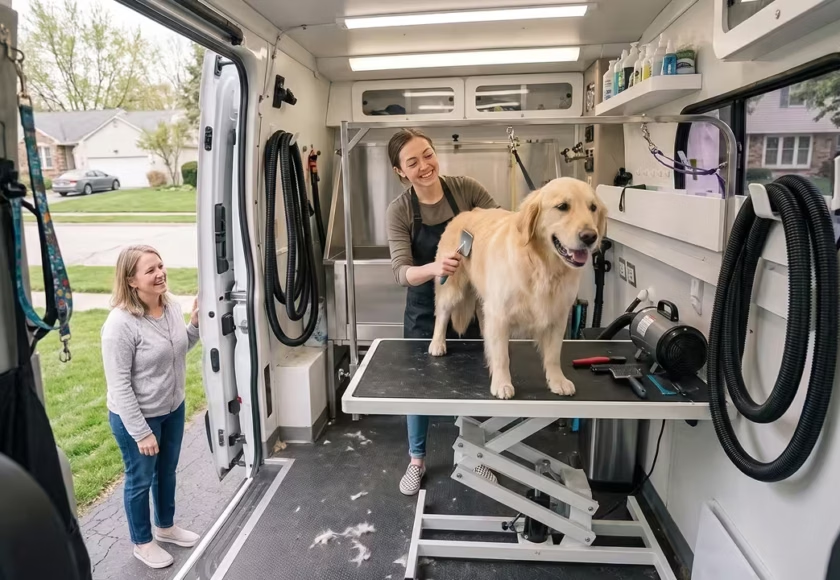
Regular grooming is about more than a clean coat. During each appointment, a groomer handles your dog’s face, ears, paws, and skin, which helps dogs get comfortable with being touched, including around the mouth. That makes home brushing much easier.
Groomers also tend to notice things owners miss, such as strong breath, red gums, or skin changes, and can point them out so you can follow up with your vet. If you are not sure how often your dog should be groomed, read our guide to grooming schedules for every coat type.
A healthy mouth also goes hand in hand with good nutrition. Learn which foods support skin and fur in our guide to a healthy dog coat.
Building a Dog Dental Care Routine That Lasts
The hardest part of dog dental care is not the brushing itself. It is sticking with it. A few habits make the routine automatic.
Tie brushing to something you already do every day, such as the evening walk or your own bedtime routine. Keep the toothbrush and toothpaste in the same visible spot so you never have to hunt for them.
Track your progress for the first month with a calendar or a phone reminder. Most dogs settle into the routine within a few weeks, and once it feels normal, a full brushing takes only a couple of minutes.
Involve the whole family, too. When everyone uses the same gentle steps and rewards, your dog gets a consistent experience no matter who is holding the brush.
A Simple Weekly Dog Dental Care Checklist
- Brush your dog’s teeth daily, or at least several times a week
- Lift the lips and look at the gums for redness or swelling
- Smell your dog’s breath and note any changes
- Check for broken or loose teeth, especially after chewing hard toys
- Replace worn toothbrushes every few months
- Offer a vet-approved dental chew if your dog enjoys them
Keeping this checklist on the fridge makes dog dental care part of your weekly rhythm, instead of something you remember only when your dog’s breath turns bad.
Dog Dental Care by Size and Breed
Every dog needs a healthy mouth, but some breeds need extra attention.
Small and toy breeds
Chihuahuas, Yorkies, Pomeranians, and other small dogs have many teeth packed into a small jaw. Crowding traps food and plaque, so small breeds often develop dental disease earlier. For them, daily dog dental care is especially valuable.
Flat-faced breeds
Bulldogs, Pugs, Shih Tzus, and other flat-faced breeds often have rotated or overlapping teeth. Brushing can be trickier, so a finger brush or a small-headed toothbrush helps you reach every surface.
Large and active breeds
Big dogs that love to chew are more likely to crack a tooth on hard objects. Choose chew toys carefully and check their teeth for chips or fractures after heavy play.
What Happens If You Skip Dog Dental Care?
Dental disease develops slowly, which is why it is easy to miss. It usually starts with plaque, which hardens into tartar. Tartar irritates the gums and causes gingivitis, a stage that can often be reversed with a professional cleaning and good home care.
Without treatment, infection can spread below the gum line and damage the tissue and bone that hold the teeth in place. This stage, called periodontitis, can lead to pain, loose teeth, and tooth loss. Regular dog dental care keeps your dog’s mouth from reaching that point, and it is far easier and less costly than treating advanced disease.
Choosing Dog Dental Care Products
The pet aisle is full of options, and not all of them work equally well. When choosing dog dental care products, keep these tips in mind:
- Look for the VOHC seal on chews, diets, and water additives
- Choose a toothbrush sized for your dog’s mouth
- Pick a toothpaste flavor your dog enjoys so brushing feels like a reward
- Avoid very hard chews that do not bend or that you cannot dent with a fingernail
- Ask your veterinarian for recommendations if your dog has sensitive gums
Making Dog Dental Care Fun
Dogs learn fastest when an activity is fun. Turn dog dental care into a game with a cheerful voice, short sessions, and a special reward that only appears after brushing. Some owners pair brushing with a favorite chew or a quick round of fetch.
If your dog seems uncomfortable, pause and go back to an easier step. Never scold or force your dog, because one bad experience can set training back by weeks. With patience, even dogs who once ran from the toothbrush can learn to sit for it calmly.
Dog Dental Care FAQ
Is it too late to start brushing an adult dog’s teeth?
No. Dogs of any age can learn to accept brushing with patience and rewards. If your dog already has heavy tartar, ask your vet about a professional cleaning first so you start with a clean mouth.
What if my dog will not let me brush?
Go back a step and spend more time on mouth handling and tasting the toothpaste. A finger brush or a piece of gauze wrapped around your finger can feel less strange than a toothbrush.
Do dental chews replace brushing?
No. Chews can help, but brushing is still the most effective way to remove plaque from every tooth surface.
Is bad breath normal for dogs?
Mild breath is normal, but strong or persistent bad breath often points to plaque, tartar, or gum disease and deserves a vet visit.
Questions to Ask Your Vet About Dog Dental Care
Your veterinarian is your best partner for keeping your dog’s mouth healthy. At the next checkup, consider asking:
- How do my dog’s teeth and gums look right now?
- Is there tartar or gum inflammation I should watch?
- How often does my dog need a professional cleaning?
- Can you show me the best way to brush my dog’s teeth?
- Which chews, diets, or products do you recommend for my dog?
- Are there signs that mean I should come in sooner?
Writing down the answers helps you build a dog dental care plan that fits your dog’s age, breed, and health. Many clinics are happy to give a quick brushing demonstration during the visit, which is a great way to build confidence if you are new to brushing.
Bring a short list of anything you have noticed at home, such as changes in breath, chewing habits, or appetite. These small observations help your vet spot problems early, often before they become painful or costly.
Common Dog Dental Care Myths
A lot of popular advice about dog teeth is outdated or simply wrong. Here are a few myths worth leaving behind.
Myth: dry kibble cleans teeth on its own. Regular kibble usually breaks apart before it can scrub the tooth surface. Only foods specially designed and tested for dental benefits help in a meaningful way, and even they work best alongside brushing.
Myth: bad breath is just part of being a dog. Strong breath is often the first sign of plaque, tartar, or gum infection. A healthy mouth should not smell much at all.
Myth: if my dog is eating, their teeth are fine. Dogs are good at hiding pain and will often keep eating even with a sore tooth. Changes are usually subtle, such as chewing on one side or dropping food.
Myth: bones and antlers are the best natural toothbrush. Very hard items can fracture teeth, which is painful and often needs veterinary treatment. Safer chews bend slightly under pressure.
Myth: dog dental care is only for older dogs. Dental disease can start young, especially in small breeds. The earlier you build the habit, the easier it is to keep teeth healthy for life.
How Long Does Dog Dental Care Take Each Day?
Once your dog is used to the routine, daily brushing takes about one to two minutes. A weekly mouth check adds another minute. That small investment of time can spare your dog pain and save you the cost of treating advanced dental disease later.
If your schedule is tight, focus on consistency over length. A quick brush of the outer surfaces every day does more good than a long, thorough session once a month. Over time, simple daily dog dental care becomes as routine as filling the water bowl.
Keep Your Dog Healthy From Nose to Tail
Good dog dental care takes only a few minutes a day, and your dog will thank you with a comfortable mouth and fresher kisses. Pair it with regular grooming for a happy, healthy pup. Bark Out Loud offers gentle mobile dog grooming in Massachusetts, right at your door. Contact us or call +1 508 282 0643 to book your dog’s next visit.
 julio.dourandroid

 mvcossenzo